<iframe src="http://www.2gb-hosting.com/embed.php?v=95aef7a1dc15c3f35da26133fe6bc6a9&resolution=620x341" width="620" height="341" frameborder="0" scrolling="no"></iframe>
Monday, 1 October 2012

Thursday, 29 March 2012
BMW HP sport :the Greatest
2012 BMW HP Sport
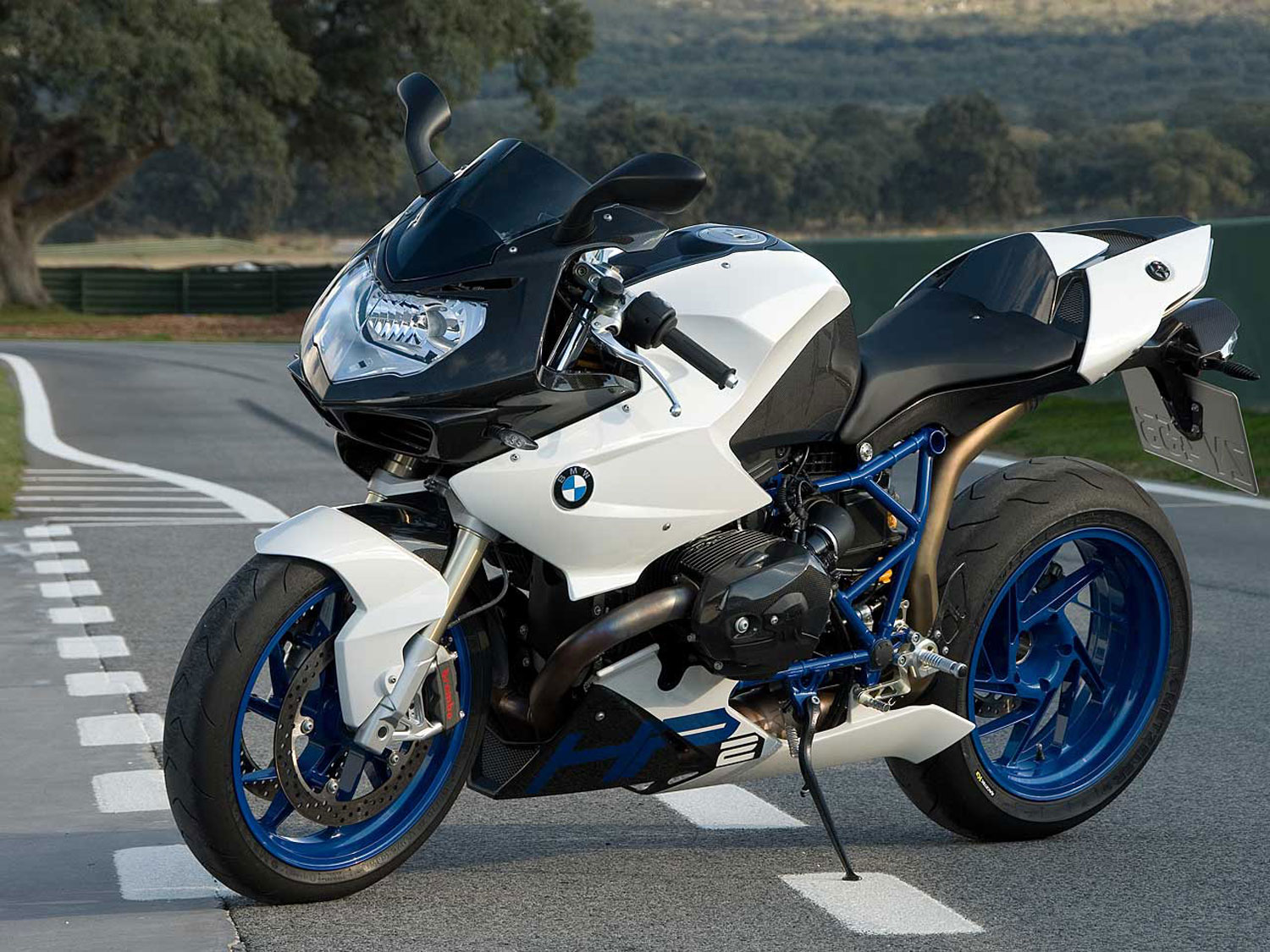
2012 BMW HP2 Sport
2012 BMW HP2 Sport Review
2012 BMW HP2 Sport
The BMW HP2 Sport caused quite a stir with its race track appearances
- rarely has a 2-cylinder flat twin bike caused the competition so much trouble,
it even outdistanced many a 4-cylinder bike. In the last 24-hour race at the
Oschersleben Speedweek, both machines entered in the race finished in the
overall top 10. One reason for this performance is the DOHC cylinder
head*, which is being used for the first time in this fascinatingly engineered
enthusiast’s motorcycle.For all ambitious sports riders and keen flat twin fans a unique limited edition of 400 is now to be produced: derived from the paint finish of the Endurance machine, it is finished in the colours Alpine White /Indigo Blue / HP Red. As in the racing machine, the rims are finished in Indigo Blue at the front and Alpine White at the rear. Otherwise all the familiar specifications apply, including the material - leading to a sensational dry weight of 178 kg - and the impressive performance figures. In short: take the opportunity to put it away right now - or else use it for what it was built for and order a second set of rims for the rain tyres along with it!
* DOHC = Double OverHead Camshaft, double overhead camshaft for each cylinder.
2012 BMW HP2 Sport Model Highlights
Standard Factory Equipment:
Special Features
Front and rear made of carbon fibre, self supporting body work
Engine spoiler made of carbon fibre
Radial Brake calliper
Gear Shift Assist
Engine/Driveline
Shaft drive
Air/oil cooled flat twin four stroke DOHC (with radial valves) engine
Cylinder head cover made of carbon fibre, with replaceable valve cover guards
Complete stainless steel exhaust system
6 Speed gearbox
Digital engine management with twin-spark ignition system
Double oil cooler
Closed loop 3 way catalytic converter with oxygen sensor
Running Gear
BMW Motorrad paralever and telelever (EVO)
6.0 x 17 inch rear wheel with 190/55 ZR 17 Tyre
Twin disk front brake (Evo,320mm dial)
Single disk rear brake
Prop stand with starter inhibit
Armoured steel brake hoses
Armoured steel clutch hoses
Forged and milled wheels, 5 double spokes
Rear and front suspension strut Ohlins, fully adjustable, additional length adjustment
Electronics
Low beam headlamp height adjustment
LED rear indicator
Hazard warning flasher
Permanent headlamp beam
Digital race instruments with 2D cluster
Electronic immobiliser
Equipment
Integral ignition switch and steering lock
Single seat
Toolkit
One key system for ignition, steering and fuel filler cap
Milled foot rests adjustable
Milled triple clamp
Milled stub handlebars, adjustable
2012 BMW HP2 Sport - UK Specifications/Technical Details
Europe MSRP Price: £15,295 GBP
Engine
Type Air/oil-cooled 2-cylinder 4-stroke flat twin ('Boxer'), two camshafts, four valves per cylinder in radial arrangement, central balancer shaft
Bore x stroke 101 mm x 73 mm
Capacity 1,170 cc
Rated output over 98 kW (133 bhp) at 8,750 rpm
Max. torque 115 Nm at 6,000 rpm
Compression ratio 12.5 : 1
Mixture control / engine management Electronic intake pipe injection / BMS-K digital engine management with overrun fuel cut-off, single-spark ignition
Emission control Closed-loop 3-way catalytic converter, emission standard EU-3
Performance / fuel consumption
Maximum speed over 200 km/h
Fuel consumption per 100 km at constant 90 km/h tbd
Fuel consumption per 100 km at constant 120 km/h dbd
Fuel type Unleaded premium, octane number 98 (RON); automatic knock control permits operation with minimum octane number 95 (RON)
Electrical System
Alternator Three-phase alternator 480 W
Battery 12 V / 12 Ah, maintenance-free
Power transmission
Clutch Single dry plate clutch, hydraulically operated
Gearbox Constant mesh 6-speed gearbox
Drive Shaft drive
Chassis / brakes
Frame Tubular steel space frame, front and rear made of self-supporting carbon
Front wheel location / suspension Telelever, spring pre-load continuously variable, compression damping, rebound damping and vehicle height adjustable
Rear wheel location / suspension EVO Paralever, Öhlins central spring strut, spring pre-load continuously adjustable, rebound and compression damping adjustable, vehicle height adjustable
Suspension travel front / rear 105 mm / 120 mm
Wheelbase 1,485 mm
Castor 86 mm
Steering head angle 66 °
Wheels Milled cast aluminium wheels
Rim, Front 3.50 x 17"
Rim, rear 6 x 17"
Tyre, front 120/70 ZR 17
Tyre, rear 190/55 ZR 17
Brake, front Dual disc brake, floating brake discs, 320 mm diameter, Brembo monobloc 4-piston caliper
Brake, rear Single disc brake, diameter 265 mm, double-piston floating caliper
ABS BMW Motorrad ABS as optional extra, deactivation function, with brake pressure detection
Dimensions / weights
Length 2,135 mm
Width (incl. mirrors) 750 mm
Height (excl. mirrors) 1,163 mm
Seat height, unladen weight 830 mm
Inner leg curve, unladen weight 1810 mm
Unladen weight, road ready, fully fueled 199 kg
Dry weight 178 kg
Permitted total weight 330 kg
Payload (with standard equipment) 131 kg
Usable tank volume 16 litres
Reserve approx. 3 litres
thanks :)
The Wait Is Over - 2012 Ninja 250R Is Here
Overview of 2012 Kawasaki Ninja 250R
Kawasaki has marketed the Ninja 250R since 1986 as an entry-level sport motorcycle intended for use on paved roads. The bike is marketed in the US as the Ninja 250R, as the ZX250 in the UK, and as the GPX250 elsewhere. Bajaj India has launched the much awaited 2012 Kawasaki Ninja 250R in Indian market and deliveries are going to start immediately.
Update: New 2012 Kawasaki Ninja 250R Now Available in India
Kawasaki unvieled the 2012 model of Ninja 250R at the EICMA Auto Show. The 2012 Ninja 250R gets new graphics, new instrument cluster and new shades. But 2012 Ninja 250R will be available still in only 2 shades in India: Ninja Green and Ebony Black.
Fast Facts About 2012 New Ninja 250R
- Gets new graphics and stickers but new shades not introduced in India
- Powered by same 249cc liquid cooled, parallel twin, DOHC petrol engine
- Maximum power of 32 Bhp at 11000 rpm with maximum torque of 22 Nm at 8200 rpm
- Still retails the analouge intrument cluster which is now finished in white shade
Looks & Styling of 2012 Kawasaki Ninja 250R
2012 Ninja 250R is the best looking 250cc sports bike in its segment. Though there is no direct competition to Ninja 250R as it is the only proper 250cc bike on sale in India. It comes with complete fairing with large plastic and steel parts. 2012 Ninja 250R features a very aggressive look when viewed head-on, as it features dual-lamp headlamp. The rear view mirrors are mounted the smart fairing which is very well integrated in line with the overall look of the bike.
Between the mirrors, there is black tinted windscreen that offers protection for the rider. Front turn indicators, however, are in the conventional style that also come out of the fairing. The mask fairing goes down at fuel tank and engine. Only the bike monogram is pasted over the petrol tank and airscoops. 2012 Ninja 250R comes factory fitted with 6 spoke black alloy wheels which looks very stunning with racing strips at rim. Under the rear seat, there are two helmet holders. The tail side is also have sporty looks. The tail protection cover is slim and sharp. Step-up seat is another attracting feature of the bike.
Instrument Cluster & Features of 2012 Kawasaki Ninja 250R
The instrument cluster of Ninja 250R disappoints a bit as it comes in analog format. Speedometer, odometer, trip meter and tachometer are in analouge mode. Even the 2012 model features all-analogue instrument cluster. The only change is that the dials are now in white shade. It looks a bit boring in comparison to other Indian bikes we are used to, like we have digital cum analog instrumet cluster for Apache RTR, Pulsar 220 and Karizma ZMR. The cluster features some warning lights such as low oil, low fuel, choked air filter, high oil temperature and low battery indicators.
Engine & Trasmission of 2012 Kawasaki Ninja 250R
Bajaj has launched the European Spec 2012 Kawasaki Ninja 250R in Indian market. It is powered by a 249cc liquid cooled, parallel twin, DOHC petrol engine which develops maximum power of 32 Bhp at 11000 rpm with maximum torque of 22 Nm at 8200 rpm. The Ninja 250R features a six-speed transmission that has been revised for smoother shifting, and is mated to a more durable clutch. It also features an entirely new radiator provides better cooling while being lighter in weight.
The engine of 2012 Ninja 250R has been tuned to deliver smooth, step-free power with an emphasis on low- and mid-range power for rider-friendly response. The Pistons feature reinforced heads and strengthening in the pin boss area for increased durability and also thick piston (longitudinally) rings help minimize oil consumption. The combustion chamber has been designed and optimized to maximize combustion efficiency and reduce emissions
Performance Figures of 2012 Kawasaki Ninja 250R:
1) 0-100km/h : 5.75 sec
2) Top speed : 176km/h
3) Fuel economy : 42.5 Kmpl - Claimed By Bajaj India
2012 Ninja 250R features refined intake and exhaust ports contribute to good off-idle response and smooth power delivery. Also the valve timing and lift has been designed for strong low- and mid-range torque while direct valve actuation ensures reliable high-rpm operability. And valves with thin heads and stems reduce reciprocating weight with 2-into-1 exhaust system contributes to the Ninja 250R’s low- and mid-range torque and smooth, step-free power curve. It meets strict emissions with dual catalyzers; one in the collector pipe and the other in the silencer positioning the first catalyzer as close to the exhaust ports maximizes its efficiency as well
The silky smooth 6-speed Gearbox features involute splines reduce friction and backlash between gears and shafts for easier gear meshing and smooth shifting under power. Also with spring-type clutch damper reduces jerkiness at very low speeds and minimizes shocks when rolling on and off the throttle for a smoother clutch feel. The paper-base friction plates help increase clutch durability.
Chasis, Suspension and Brakes of 2012 Kawasaki Ninja 250R
On the chassis front, Ninja 250R features a new diamond-type frame constructed of high tensile steel provides a steeper steering head rake angle, which results in an unchanged wheelbase when mated with a longer swingarm. The fork is larger and stiffer, with revised settings in comparison to 2008 model of Ninja 250R. Ninja's 37mm telescopic front fork with firm settings contribute to the 250R’s smooth, stable handling and enhanced ride control.
Also with uni-Trak rear suspension which compliments the rigid frame and re-tuned fork and provides great road holding ability. Rear shock features 5-way adjustable preload, enabling ride height to be maintained whether riding solo or with a passenger. The stopping power of Ninja 250R comes from large-diameter, 290mm front hydraulic disc at the front and a balanced action two-piston caliper offers excellent braking performance and a natural, direct feeling at the lever. The rear features two-piston caliper grips the rear 220mm petal disc
Shades Available in Kawasaki Ninja 250R
- Lime Green
- Ebony Black
2012 Ninja 250R is available in 2 shades - Lime Green and Ebony Black. Though it is also available in red, white and blue in other global markets but Bajaj has launched it here in only two shades. It looks best in Lime Green shade for which all kawasakis are known for like we have yellow for a Lamborghini, red for a Ferrari & blue for a Yamaha.
thanks :)
Kawasaki has marketed the Ninja 250R since 1986 as an entry-level sport motorcycle intended for use on paved roads. The bike is marketed in the US as the Ninja 250R, as the ZX250 in the UK, and as the GPX250 elsewhere. Bajaj India has launched the much awaited 2012 Kawasaki Ninja 250R in Indian market and deliveries are going to start immediately.
Update: New 2012 Kawasaki Ninja 250R Now Available in India
Kawasaki unvieled the 2012 model of Ninja 250R at the EICMA Auto Show. The 2012 Ninja 250R gets new graphics, new instrument cluster and new shades. But 2012 Ninja 250R will be available still in only 2 shades in India: Ninja Green and Ebony Black.
Fast Facts About 2012 New Ninja 250R
- Gets new graphics and stickers but new shades not introduced in India
- Powered by same 249cc liquid cooled, parallel twin, DOHC petrol engine
- Maximum power of 32 Bhp at 11000 rpm with maximum torque of 22 Nm at 8200 rpm
- Still retails the analouge intrument cluster which is now finished in white shade
Looks & Styling of 2012 Kawasaki Ninja 250R
2012 Ninja 250R is the best looking 250cc sports bike in its segment. Though there is no direct competition to Ninja 250R as it is the only proper 250cc bike on sale in India. It comes with complete fairing with large plastic and steel parts. 2012 Ninja 250R features a very aggressive look when viewed head-on, as it features dual-lamp headlamp. The rear view mirrors are mounted the smart fairing which is very well integrated in line with the overall look of the bike.
Between the mirrors, there is black tinted windscreen that offers protection for the rider. Front turn indicators, however, are in the conventional style that also come out of the fairing. The mask fairing goes down at fuel tank and engine. Only the bike monogram is pasted over the petrol tank and airscoops. 2012 Ninja 250R comes factory fitted with 6 spoke black alloy wheels which looks very stunning with racing strips at rim. Under the rear seat, there are two helmet holders. The tail side is also have sporty looks. The tail protection cover is slim and sharp. Step-up seat is another attracting feature of the bike.
Instrument Cluster & Features of 2012 Kawasaki Ninja 250R
The instrument cluster of Ninja 250R disappoints a bit as it comes in analog format. Speedometer, odometer, trip meter and tachometer are in analouge mode. Even the 2012 model features all-analogue instrument cluster. The only change is that the dials are now in white shade. It looks a bit boring in comparison to other Indian bikes we are used to, like we have digital cum analog instrumet cluster for Apache RTR, Pulsar 220 and Karizma ZMR. The cluster features some warning lights such as low oil, low fuel, choked air filter, high oil temperature and low battery indicators.
Engine & Trasmission of 2012 Kawasaki Ninja 250R
Bajaj has launched the European Spec 2012 Kawasaki Ninja 250R in Indian market. It is powered by a 249cc liquid cooled, parallel twin, DOHC petrol engine which develops maximum power of 32 Bhp at 11000 rpm with maximum torque of 22 Nm at 8200 rpm. The Ninja 250R features a six-speed transmission that has been revised for smoother shifting, and is mated to a more durable clutch. It also features an entirely new radiator provides better cooling while being lighter in weight.
The engine of 2012 Ninja 250R has been tuned to deliver smooth, step-free power with an emphasis on low- and mid-range power for rider-friendly response. The Pistons feature reinforced heads and strengthening in the pin boss area for increased durability and also thick piston (longitudinally) rings help minimize oil consumption. The combustion chamber has been designed and optimized to maximize combustion efficiency and reduce emissions
Performance Figures of 2012 Kawasaki Ninja 250R:
1) 0-100km/h : 5.75 sec
2) Top speed : 176km/h
3) Fuel economy : 42.5 Kmpl - Claimed By Bajaj India
2012 Ninja 250R features refined intake and exhaust ports contribute to good off-idle response and smooth power delivery. Also the valve timing and lift has been designed for strong low- and mid-range torque while direct valve actuation ensures reliable high-rpm operability. And valves with thin heads and stems reduce reciprocating weight with 2-into-1 exhaust system contributes to the Ninja 250R’s low- and mid-range torque and smooth, step-free power curve. It meets strict emissions with dual catalyzers; one in the collector pipe and the other in the silencer positioning the first catalyzer as close to the exhaust ports maximizes its efficiency as well
The silky smooth 6-speed Gearbox features involute splines reduce friction and backlash between gears and shafts for easier gear meshing and smooth shifting under power. Also with spring-type clutch damper reduces jerkiness at very low speeds and minimizes shocks when rolling on and off the throttle for a smoother clutch feel. The paper-base friction plates help increase clutch durability.
Chasis, Suspension and Brakes of 2012 Kawasaki Ninja 250R
On the chassis front, Ninja 250R features a new diamond-type frame constructed of high tensile steel provides a steeper steering head rake angle, which results in an unchanged wheelbase when mated with a longer swingarm. The fork is larger and stiffer, with revised settings in comparison to 2008 model of Ninja 250R. Ninja's 37mm telescopic front fork with firm settings contribute to the 250R’s smooth, stable handling and enhanced ride control.
Also with uni-Trak rear suspension which compliments the rigid frame and re-tuned fork and provides great road holding ability. Rear shock features 5-way adjustable preload, enabling ride height to be maintained whether riding solo or with a passenger. The stopping power of Ninja 250R comes from large-diameter, 290mm front hydraulic disc at the front and a balanced action two-piston caliper offers excellent braking performance and a natural, direct feeling at the lever. The rear features two-piston caliper grips the rear 220mm petal disc
Shades Available in Kawasaki Ninja 250R
- Lime Green
- Ebony Black
2012 Ninja 250R is available in 2 shades - Lime Green and Ebony Black. Though it is also available in red, white and blue in other global markets but Bajaj has launched it here in only two shades. It looks best in Lime Green shade for which all kawasakis are known for like we have yellow for a Lamborghini, red for a Ferrari & blue for a Yamaha.
thanks :)
Wednesday, 28 March 2012
Hyundai Sonata :Fludic Arrives
The all-new Hyundai Sonata Fluidic rolls in at a starting price of Rs 18.52 lacs. With the debut at 2012 Auto Expo in Delhi, the Sonata Fluidic was one of the most anticipated cars of the year. Hyundai Motor India Ltd officially launched the flagship of Hyundai- 2012 Sonata Fluidic.
While the manual transmission comes in at Rs 18.52 lacs, the automatic
version is just a little above at Rs 20.61 lacs (ex-showroom Delhi).
According to the Managing director and CEO HMIL, Mr B S Seo, the new Sonata Fluidic has best-in-class features with the new GDi engine. He also stated that the car is competitively priced with features to satisfy premium customers.
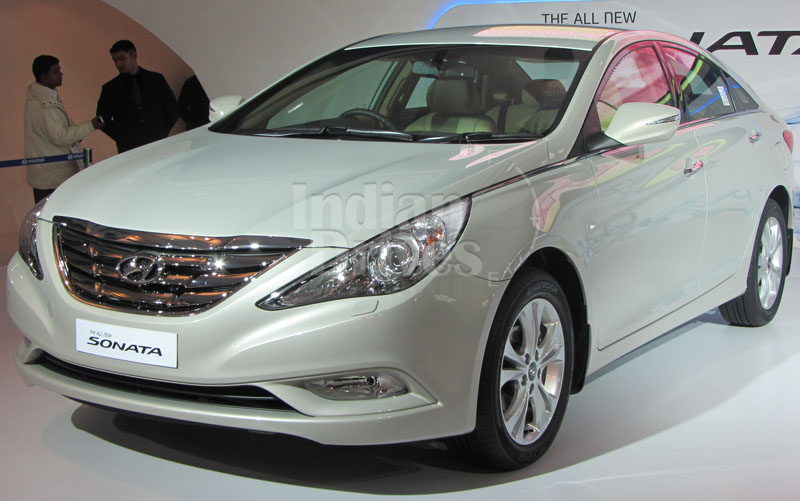
With the Union Budget 2012-13 concluded, Hyundai Motor India Ltd felt it was the right time to launch the car, giving the potential customers a better idea of the car in the crowded premium class market. The Korean automaker has launched the car to go up against the premium class sedans, including Skoda Superb, Toyota Camry, Honda Accord and Nissan Teana.
On the outside, the Sonata Fluidic is a mean muscular car with much likes from the Audi or Jaguar. It follows the Korean automakers ‘Fluidic Sculpture’ design language. There is chrome front grille with bigger and bolder HID xenon headlamps. While on the sides, it has more confident curves and sporty sleek lines.
Talking of interiors, the Sonata Fluidic has top-notch quality interiors with elegant feel. It has ten-way adjustable power-seats with lumbar and a four-way power adjustable front co-driver seat. For entertainment there is 2-DIN audio system with rear view display. Customers desiring more comfort get front and rear seat ventilation, front seat warmers and VFD (vacuum fluorescent display).
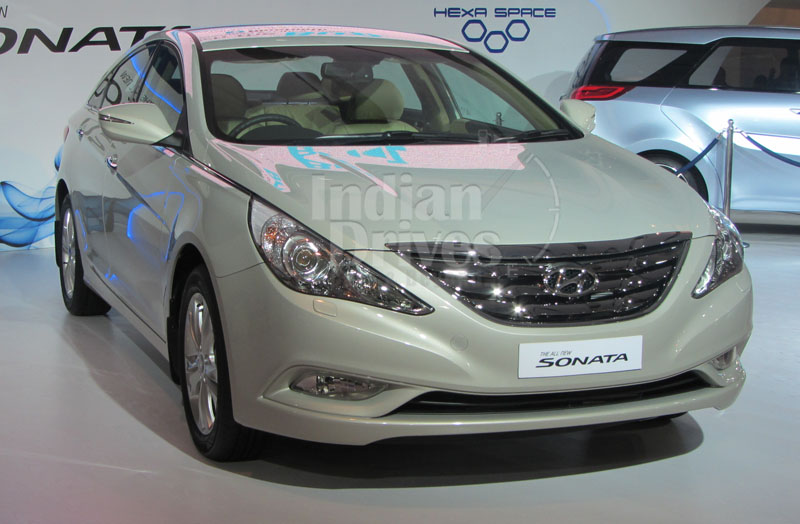
High on safety, the new Sonata Fluidic features ESP (electronic stability program), TCS (traction control system), ABS (antilock braking system), EBD (electronic brake-force distribution), six air bags, rear view camera and smart key with push button start.
Under the hood is a 2.4-litre GDi petrol engine that develops about 200 bhp. Hyundai offers option for the transmission from 6-speed automatic and 6-speed manual gearbox. With the new GDi engine, the Sonata Fluidic boasts superb power with greater fuel efficiency.
Heres The Video
Thanks :)
According to the Managing director and CEO HMIL, Mr B S Seo, the new Sonata Fluidic has best-in-class features with the new GDi engine. He also stated that the car is competitively priced with features to satisfy premium customers.
With the Union Budget 2012-13 concluded, Hyundai Motor India Ltd felt it was the right time to launch the car, giving the potential customers a better idea of the car in the crowded premium class market. The Korean automaker has launched the car to go up against the premium class sedans, including Skoda Superb, Toyota Camry, Honda Accord and Nissan Teana.
On the outside, the Sonata Fluidic is a mean muscular car with much likes from the Audi or Jaguar. It follows the Korean automakers ‘Fluidic Sculpture’ design language. There is chrome front grille with bigger and bolder HID xenon headlamps. While on the sides, it has more confident curves and sporty sleek lines.
Talking of interiors, the Sonata Fluidic has top-notch quality interiors with elegant feel. It has ten-way adjustable power-seats with lumbar and a four-way power adjustable front co-driver seat. For entertainment there is 2-DIN audio system with rear view display. Customers desiring more comfort get front and rear seat ventilation, front seat warmers and VFD (vacuum fluorescent display).
High on safety, the new Sonata Fluidic features ESP (electronic stability program), TCS (traction control system), ABS (antilock braking system), EBD (electronic brake-force distribution), six air bags, rear view camera and smart key with push button start.
Under the hood is a 2.4-litre GDi petrol engine that develops about 200 bhp. Hyundai offers option for the transmission from 6-speed automatic and 6-speed manual gearbox. With the new GDi engine, the Sonata Fluidic boasts superb power with greater fuel efficiency.
Heres The Video
Thanks :)
BMW 3Series :Bangs Again
The smooth roads are twisty and going
downhill, I haven't blinked even once and the car is flowing through the
corners with just the right amount of feedback from the steering, it's
well planted and doesn't want to let go of the road. I find myself drawn
into believing that Iam in some kind of driver's utopia. But this is
not a dream. It's the all-new BMW 3 Series that will arrive in India in
June 2012 and making the occasion even more special is the location -
Spain's majestic Catalan mountain range. The changes in the car may not
seem like a lot on paper but when we headed to the Circuit de Catalunya
near Barcelona to drive it, it turned out to be completely different and
a distinct step up from the present car.
I first drove the variant most relevant to India, the 320d. The engine specs are the same -2.0-litrecommon-rail engine which produces 184PS of maximum power at 4000rpm and 380Nm of torque between 1750 and 2750rpm. The car now offers fourstandard driving modes. The switch on the centre console allows me to choose between eco pro, comfort, sport and sport plus modes. The 8-speed automatic gearbox is new, replacing the previous six-speeder,and will be standard on all variants of the 3 Series sold in India.The unnecessarily heavy steering was the old 3's Achilles heel but the 3 Series now has a new electronic power steering which is significantly lighter (a massive boon while parking and in city traffic) while simultaneously offering better precision and feedback than before. It also saves fuel in comparison to the hydraulic assist system because it consumes no power when the steering is held steady.
Then I hopped into to the 328i petrol which now trades in its straight-six (in the 330i that didn't do well in India) for a2.0-litre turbocharged inline four and - in the Sport variant - rides10mm lower. This engine is good for an astonishing (considering the2.0-litre displacement) 245PS of power between 5000 and 6500rpm and delivers a peak torque of 350Nm between 1250 and 4800rpm. Not only is this 9 per cent more torque then before, it means the car is nearly always at its torque or power peak. The 328i can hit 100kmph in just 5.9 seconds, a full second quicker than the old one, and that's a very fast time. Part of the reason is the BMW twin-scroll turbo (it is nota twin-turbo despite the Twin Power moniker) which demonstrates a near complete lack of turbo lag and the general throttle response is wonderful. The other petrol is the 320i which uses the same 2.0-litreengine but in non-turbocharged 184PS and 270Nm tune and that is an engine that will power entry-level variants in India.
 The new 3 runs on an all-new platform incorporating a lot of the 5
Series'architecture, aluminium and steel body panels and aluminium
suspension parts including double wishbones at the front (like the
5-Series) and multi-link Z-axle at the rear with (optional) variable
dampers.Overall weight has gone down by 45kg even though the new 3 is
93mm longer with a 50mm longer wheelbase and wider front and rear
tracks.The increase in wheelbase allows for a wider rear door opening
and the larger glass area makes it feel roomier. Crucially rear knee
room is up by 15mm and headroom increases by 8mm which is a very welcome
improvement and will find favour with Indian buyers. Boot space is also
up by 20 litres to 480. What will also find favour is the ride quality
which is an absolute revelation.
The new 3 runs on an all-new platform incorporating a lot of the 5
Series'architecture, aluminium and steel body panels and aluminium
suspension parts including double wishbones at the front (like the
5-Series) and multi-link Z-axle at the rear with (optional) variable
dampers.Overall weight has gone down by 45kg even though the new 3 is
93mm longer with a 50mm longer wheelbase and wider front and rear
tracks.The increase in wheelbase allows for a wider rear door opening
and the larger glass area makes it feel roomier. Crucially rear knee
room is up by 15mm and headroom increases by 8mm which is a very welcome
improvement and will find favour with Indian buyers. Boot space is also
up by 20 litres to 480. What will also find favour is the ride quality
which is an absolute revelation.
Three trim levels are on offer - Modern, Luxury and Sport. In the Sport trim, optional adaptive dampers, sport-spec Servotronic steering, 19-inch wheels and new generation run flat tyres ensures the 3 no longer crashes violently into potholes instead it breathes over them. The Modern trim on thediesel gets 18-inch rims that deliver an even better ride quality and though we will reserve final judgement till we drive the car on Indian roads I have a strong feeling this might deliver the best ride quality in its class. Plus Indian cars will get 17-inch wheels that have even higher profile tyres. That doesn't mean the 3 Series has become a softie. On the contrary the all-new suspension setup delivers exceedingly good dynamics. The first thing that hits you is just how amazingly light she is on her feet, so nimble. There's a balance,precision and fluidity that does the Ultimate Driving Machine tag proud. Sport plus mode even allows a few naughty slides and together with the classic 50:50 weight distribution, incredibly well-weighted steering and a front-end that is seemingly immune to understeer she's an absolute riot.
After a day spent at the Catalunya circuit testing the 3, I then switched into eco pro mode for the drive back to the airport. This mode maximises efficiency by altering the accelerator map to damp throttle responses and deliver less power in the first 70 per cent of pedal travel. I was quite pleased to note a seven kilometre gain over a 60 kilometre drive. That's more than 11 per cent, and therefore significant. Did I mention that auto start-stopand brake energy regeneration are now standard?
And saving the best for last: the visual story is that the new 3, as you can see, is dramatically different from other BMW saloons and to my eye is the best looking BMW today. It wears the new family theme better than the soft and boring 5 and 7, sharing more in common with the 1 Series. It is still unmistakably a 3 Series but is sleeker, more muscular and has an even more pronounced long-bonnet cab-backward stance to highlight rear-wheel-drive and the attendant dynamic abilities. There are even hints of the Z4 sports coupe in the nose while the headlamps are a key visual signature extending up to and abutting the kidney grille. This gives the front-end a distinctive look unlike any other BMW, allied to the squared-off circular LED corona rings. The profile gets a new line running through the door handles and together with the swage line under the window line it gives a prominent wedge shaped profile adding to the dynamic stance. From the rear, the L-shaped taillights remind me of the bigger 5 Series and blend well with the shoulder line, while the integrated spoiler on the boot gives it a sporty appearance.Overall, the 3 Series is a very attractive car and manages a fine balance between elegance and sportiness.
Step inside and the interiors are a leap ahead of its predecessor in terms of appeal. The widescreen centre display looks more like a slim tablet mounted on top of the dashboard and not built-in like before. This reduces visual bulk and together with the millimetres added to the cabin it makes itfeel far more roomy. The dashboard is driver-focused and is angled towards the driver just like the 5 Series by seven degrees. iDrive is now standard across the range and the controller is the same as in the5, as are a lot of other controls, all of which gives a very high-quality air to the cabin. The interiors also reflect the three trims – and so Modern gets a never seen before new oyster shade, the Sport gets full black interiors with red detailing and the Luxury is more like the Highline model we are used to with dual tone shade and chrome detailing. The different lines even have colour-coded keys but you will have to wait till June 2012 to get your hands on one.Should you wait? In a word - yes. The new 3 is faster, sharper,easier to drive, more involving, better looking, more spacious, more comfortable... heck it is better in every conceivable area. Audi and Mercedes better watch out for the new 3 will re-write practically every benchmark in this class. And now if you will excuse me I've got a few more Spanish roads to tackle.
Heres The Video
Thanks :)
I first drove the variant most relevant to India, the 320d. The engine specs are the same -2.0-litrecommon-rail engine which produces 184PS of maximum power at 4000rpm and 380Nm of torque between 1750 and 2750rpm. The car now offers fourstandard driving modes. The switch on the centre console allows me to choose between eco pro, comfort, sport and sport plus modes. The 8-speed automatic gearbox is new, replacing the previous six-speeder,and will be standard on all variants of the 3 Series sold in India.The unnecessarily heavy steering was the old 3's Achilles heel but the 3 Series now has a new electronic power steering which is significantly lighter (a massive boon while parking and in city traffic) while simultaneously offering better precision and feedback than before. It also saves fuel in comparison to the hydraulic assist system because it consumes no power when the steering is held steady.
Then I hopped into to the 328i petrol which now trades in its straight-six (in the 330i that didn't do well in India) for a2.0-litre turbocharged inline four and - in the Sport variant - rides10mm lower. This engine is good for an astonishing (considering the2.0-litre displacement) 245PS of power between 5000 and 6500rpm and delivers a peak torque of 350Nm between 1250 and 4800rpm. Not only is this 9 per cent more torque then before, it means the car is nearly always at its torque or power peak. The 328i can hit 100kmph in just 5.9 seconds, a full second quicker than the old one, and that's a very fast time. Part of the reason is the BMW twin-scroll turbo (it is nota twin-turbo despite the Twin Power moniker) which demonstrates a near complete lack of turbo lag and the general throttle response is wonderful. The other petrol is the 320i which uses the same 2.0-litreengine but in non-turbocharged 184PS and 270Nm tune and that is an engine that will power entry-level variants in India.
Three trim levels are on offer - Modern, Luxury and Sport. In the Sport trim, optional adaptive dampers, sport-spec Servotronic steering, 19-inch wheels and new generation run flat tyres ensures the 3 no longer crashes violently into potholes instead it breathes over them. The Modern trim on thediesel gets 18-inch rims that deliver an even better ride quality and though we will reserve final judgement till we drive the car on Indian roads I have a strong feeling this might deliver the best ride quality in its class. Plus Indian cars will get 17-inch wheels that have even higher profile tyres. That doesn't mean the 3 Series has become a softie. On the contrary the all-new suspension setup delivers exceedingly good dynamics. The first thing that hits you is just how amazingly light she is on her feet, so nimble. There's a balance,precision and fluidity that does the Ultimate Driving Machine tag proud. Sport plus mode even allows a few naughty slides and together with the classic 50:50 weight distribution, incredibly well-weighted steering and a front-end that is seemingly immune to understeer she's an absolute riot.
After a day spent at the Catalunya circuit testing the 3, I then switched into eco pro mode for the drive back to the airport. This mode maximises efficiency by altering the accelerator map to damp throttle responses and deliver less power in the first 70 per cent of pedal travel. I was quite pleased to note a seven kilometre gain over a 60 kilometre drive. That's more than 11 per cent, and therefore significant. Did I mention that auto start-stopand brake energy regeneration are now standard?
And saving the best for last: the visual story is that the new 3, as you can see, is dramatically different from other BMW saloons and to my eye is the best looking BMW today. It wears the new family theme better than the soft and boring 5 and 7, sharing more in common with the 1 Series. It is still unmistakably a 3 Series but is sleeker, more muscular and has an even more pronounced long-bonnet cab-backward stance to highlight rear-wheel-drive and the attendant dynamic abilities. There are even hints of the Z4 sports coupe in the nose while the headlamps are a key visual signature extending up to and abutting the kidney grille. This gives the front-end a distinctive look unlike any other BMW, allied to the squared-off circular LED corona rings. The profile gets a new line running through the door handles and together with the swage line under the window line it gives a prominent wedge shaped profile adding to the dynamic stance. From the rear, the L-shaped taillights remind me of the bigger 5 Series and blend well with the shoulder line, while the integrated spoiler on the boot gives it a sporty appearance.Overall, the 3 Series is a very attractive car and manages a fine balance between elegance and sportiness.
Step inside and the interiors are a leap ahead of its predecessor in terms of appeal. The widescreen centre display looks more like a slim tablet mounted on top of the dashboard and not built-in like before. This reduces visual bulk and together with the millimetres added to the cabin it makes itfeel far more roomy. The dashboard is driver-focused and is angled towards the driver just like the 5 Series by seven degrees. iDrive is now standard across the range and the controller is the same as in the5, as are a lot of other controls, all of which gives a very high-quality air to the cabin. The interiors also reflect the three trims – and so Modern gets a never seen before new oyster shade, the Sport gets full black interiors with red detailing and the Luxury is more like the Highline model we are used to with dual tone shade and chrome detailing. The different lines even have colour-coded keys but you will have to wait till June 2012 to get your hands on one.Should you wait? In a word - yes. The new 3 is faster, sharper,easier to drive, more involving, better looking, more spacious, more comfortable... heck it is better in every conceivable area. Audi and Mercedes better watch out for the new 3 will re-write practically every benchmark in this class. And now if you will excuse me I've got a few more Spanish roads to tackle.
Heres The Video
Thanks :)
Audi A4:The Ultimate Rocker
Audi
A4 2.0 TDI is powered by Inline four cylinder 1968 cc diesel engine
that renders an output of 105 KW at 4200 rpm and a maximum torque of
320Nm at 1750-2500 rpm. While Audi A4 3.0 TDI quattro is equipped with
2967 V6 diesel engine that gives an output of 176 KW at 4000-4400 rpm
and renders a maximum torque of 500 Nm at 1500-3000 rpm.
Audi A4 1.8 TFSI is powered by inline four cylinder 1798 cc petrol engine that yields an ouput of 118 KW at 4500-6200 rpm and a top most torque of 250 Nm at 1500-4500 rpm. And another petrol variant Audi A4 2.0 TFSI has an inline four cylinder spark engine that gives a maximum output of 132 KW at 4000-6000 rpm and a maximum torque of 320 Nm at 1500-3900 rpm. Audi A4 3.2 FSI quattro V6 3197 cc petrol engine that renders an output of 195 KW at 6500 rpm and a maximum torque of 330 Nm at 3000-5000 rpm.
The exteriors of the car include exterior glass roof, exterior mirrors, automatic dimming and folding, electrically adjustable with memory function, front fog lamps, light and rain sensor, metallic paint, body colored bumpers, rear defogger, rear wash wipeXenon plus bi functional headlights with day time running lights, power windows (front and rear), Active reflectors in the front and rear doors, Electrically tilting/sliding glass sunroof with automatic preselection of the required sliding-roof position, tinted glass insert, variable sunshield, Roller sunblinds for rear seat passengers.
Features in the interior include interior chrome package, interior light package, Comfort automatic airconditioning 3 zone, front seats electrically adjustable with memory function for driver's seat.Audi Sound Sysytem, On Board Computer, Mobile phone prepearation and Radio Symphony, storage net on the back of the front seats, storage net in the front-seat passenger footwell & two cup/can holders in the rear-seat centre armrest, drawer under the front seats, dashboard and a large console area and illuminated ashtrays in the rear doors.
 Differnt
variants of Audi A4 offer different power and torque. As mentioned
above, Audi A4 is available with five variants out of which 3.2 FSI
quattro,2.0 FSI and 1.8 FSI bear a petrol engine and 2.0 TDI and 3.0 TDI
quattro bear a diesel engine. Audi A4 2.0 TFSI yields a power of 132 KW at 4000-6000 rpm and a maximum torque of 320 Nm at 1500-3900 rpm.Audi 3.2 FSI quattro generates a power of 195 KW at 6500 rpm and a top most torque of 330 Nm at 3000-5000 rpm.
Differnt
variants of Audi A4 offer different power and torque. As mentioned
above, Audi A4 is available with five variants out of which 3.2 FSI
quattro,2.0 FSI and 1.8 FSI bear a petrol engine and 2.0 TDI and 3.0 TDI
quattro bear a diesel engine. Audi A4 2.0 TFSI yields a power of 132 KW at 4000-6000 rpm and a maximum torque of 320 Nm at 1500-3900 rpm.Audi 3.2 FSI quattro generates a power of 195 KW at 6500 rpm and a top most torque of 330 Nm at 3000-5000 rpm.
Audi A4 1.8 TFSI yields an ouput of 118 KW at 4500-6200 rpm and a top most torque of 250 Nm at 1500-4500 rpm.Audi A4 2.0 TDI has a 2.0 L turbodiesel engine with common rail injection system,that results in a maximum torque of 320Nm at 1750-2500 rpm and a maximum output of 105 KW at 4200 rpm.Its other diesel variant that is 3.0 TDI quattro comes with a common rail injection system and renders a maximum output of 176 KW at 4000-4400 rpm and a maximum torque of 500 Nm at 1500-3000 rpm.
 Audi A4 3.2 FSI picks up the speed of 60 kmph from 0 kmph in a mere 4.03 seconds and attains a speed of 100kmph from 0kmph in 8.05 seconds.It can touch a top speed of 250kmph. On the other hand,3.0 Turbodiesel touches the mark of 100 kmph from 0 kmph in 6.68 seconds and goes from 0-60kmph in 2.87 seconds.It can touch a top speed of 250 kmph. Lastly 2.0 TDI goes from 0-60 kmph in a matter of 4.37 seconds and from 0-100 kmph in 10.80 seconds.It can touch the top speed of 210 kmph.

You'll fall in love with Audi A4 as soon as
you st eyes on it.Its sheer elegance and neat lines are sure to take
your breath away and just when you thought there could not be anything
better,you step inside and experience a whole new world around you. The
car exhibits a class unmatched by other other.The exteriors of this
desirable beauty include Exterior glass roof,exterior mirrors,automatic dimming and folding,electrically adjustable with memory function, front fog lamps, light and rain sensor, metallic paint, body colored bumpers, rear defogger, rear wash wipe, Xenon plus bi functional headlights with day time running lights, power windows (front and rear), Active reflectors in the front and rear doors, Electrically tilting/sliding glass sunroof with automatic preselection of the required sliding-roof position, tinted glass insert, variable sunshield, Roller sunblinds for rear seat passengers.
 Audi A4 comes with both petrol and diesel engines.The diesel varianst of the car namely 2.0 TDI
offers power of 105 KW at 4200 rpm and a maximum torque of 320 Nm at
1750 rpm.Audi A4 3.0 TDI which is another diesel variant generates
maximum output of 176 KW at 4000-4400 rpm and a maximum torque of 500
Nm at 1500-3000 rpm.
Audi A4 comes with both petrol and diesel engines.The diesel varianst of the car namely 2.0 TDI
offers power of 105 KW at 4200 rpm and a maximum torque of 320 Nm at
1750 rpm.Audi A4 3.0 TDI which is another diesel variant generates
maximum output of 176 KW at 4000-4400 rpm and a maximum torque of 500
Nm at 1500-3000 rpm.
The petrol variants of the car i.e 2.0 TFSI offers a maximum output of 132 KW at 4000-6000 rpm and maximum torque of 320 Nm at 1500-3900 rpm. Audi A4 3.2 FSI generates a power of 195 KW at 6500 rpm and a top most torque of 330 Nm at 3000-5000 rpm. Audi A4 1.8 TFSI offers an ouput of 118 KW at 4500-6200 rpm and a top most torque of 250 Nm at 1500-4500 rpm
 Audi A4 has a wheelbase that measures up to be 2808 mm.A4 2.0
TDI,A4 1.8 TFSI and A4 2.0 TFSI is a front wheel drive with multitronic transmission that is equipped with steel wheels measuring 7.5 J x16 with full wheel covers.The size of the tyres measures up to be 225/55 R16.
Audi A4 has a wheelbase that measures up to be 2808 mm.A4 2.0
TDI,A4 1.8 TFSI and A4 2.0 TFSI is a front wheel drive with multitronic transmission that is equipped with steel wheels measuring 7.5 J x16 with full wheel covers.The size of the tyres measures up to be 225/55 R16.
Audi A4 3.0 TDI and Audi A4 3.2 FSI is a permanent all wheel drive with triptonic transmission that bears forged light weight wheels measuring 7.5 Jx17 and tyre size of 225/50 R17.the tyres measure up to be 225/50 R17.
 Audi A4 includes an inbuilt CD player,an LCD
located on the top of the instrumental panel which can tilted towards
the driver's seat.A small LCD screen is also placed between the
tachometer and speedometer that displays details of navigation when the
driver chooses for guidance on routes,illuminated ashtrays in the rear
doors, drawer under the front seats, storage nets behind the front
seats,Optical parking assistant for front & rear displaying an
image of the area directly behind the car on the MMI display, the
camera mounted on the boot lid handle
Audi A4 includes an inbuilt CD player,an LCD
located on the top of the instrumental panel which can tilted towards
the driver's seat.A small LCD screen is also placed between the
tachometer and speedometer that displays details of navigation when the
driver chooses for guidance on routes,illuminated ashtrays in the rear
doors, drawer under the front seats, storage nets behind the front
seats,Optical parking assistant for front & rear displaying an
image of the area directly behind the car on the MMI display, the
camera mounted on the boot lid handle
Audi A4 1.8 TFSI is powered by inline four cylinder 1798 cc petrol engine that yields an ouput of 118 KW at 4500-6200 rpm and a top most torque of 250 Nm at 1500-4500 rpm. And another petrol variant Audi A4 2.0 TFSI has an inline four cylinder spark engine that gives a maximum output of 132 KW at 4000-6000 rpm and a maximum torque of 320 Nm at 1500-3900 rpm. Audi A4 3.2 FSI quattro V6 3197 cc petrol engine that renders an output of 195 KW at 6500 rpm and a maximum torque of 330 Nm at 3000-5000 rpm.
The exteriors of the car include exterior glass roof, exterior mirrors, automatic dimming and folding, electrically adjustable with memory function, front fog lamps, light and rain sensor, metallic paint, body colored bumpers, rear defogger, rear wash wipeXenon plus bi functional headlights with day time running lights, power windows (front and rear), Active reflectors in the front and rear doors, Electrically tilting/sliding glass sunroof with automatic preselection of the required sliding-roof position, tinted glass insert, variable sunshield, Roller sunblinds for rear seat passengers.
Features in the interior include interior chrome package, interior light package, Comfort automatic airconditioning 3 zone, front seats electrically adjustable with memory function for driver's seat.Audi Sound Sysytem, On Board Computer, Mobile phone prepearation and Radio Symphony, storage net on the back of the front seats, storage net in the front-seat passenger footwell & two cup/can holders in the rear-seat centre armrest, drawer under the front seats, dashboard and a large console area and illuminated ashtrays in the rear doors.
Audi A4 Mileage, Average And Fuel Economy
The petrol variant of Audi A4 i.e 3.2 FSI, offers a mileage of 5kmpl in the city and 7.3 kmpl on the highway while the other variants like 2.0 TFSI and 1.8 FSI render a mileage of 12.76 kmpl and 12.40 kmpl on Indian roads.
Audi A4 Power
Differnt
variants of Audi A4 offer different power and torque. As mentioned
above, Audi A4 is available with five variants out of which 3.2 FSI
quattro,2.0 FSI and 1.8 FSI bear a petrol engine and 2.0 TDI and 3.0 TDI
quattro bear a diesel engine. Audi A4 2.0 TFSI yields a power of 132 KW at 4000-6000 rpm and a maximum torque of 320 Nm at 1500-3900 rpm.Audi 3.2 FSI quattro generates a power of 195 KW at 6500 rpm and a top most torque of 330 Nm at 3000-5000 rpm.Audi A4 1.8 TFSI yields an ouput of 118 KW at 4500-6200 rpm and a top most torque of 250 Nm at 1500-4500 rpm.Audi A4 2.0 TDI has a 2.0 L turbodiesel engine with common rail injection system,that results in a maximum torque of 320Nm at 1750-2500 rpm and a maximum output of 105 KW at 4200 rpm.Its other diesel variant that is 3.0 TDI quattro comes with a common rail injection system and renders a maximum output of 176 KW at 4000-4400 rpm and a maximum torque of 500 Nm at 1500-3000 rpm.
Audi A4 Colors
These colors are available with all variants of Audi A4
Brilliant Red
Meteor Grey Metallic
Phantom Black
Ibis White
Dakar Beige Metallic
Ice Silver Metallic
Phantom Black
Ibis White
Dakar Beige Metallic
Ice Silver Metallic
Audi A4 Acceleration & Pick-Up
Audi A4 3.2 FSI picks up the speed of 60 kmph from 0 kmph in a mere 4.03 seconds and attains a speed of 100kmph from 0kmph in 8.05 seconds.It can touch a top speed of 250kmph. On the other hand,3.0 Turbodiesel touches the mark of 100 kmph from 0 kmph in 6.68 seconds and goes from 0-60kmph in 2.87 seconds.It can touch a top speed of 250 kmph. Lastly 2.0 TDI goes from 0-60 kmph in a matter of 4.37 seconds and from 0-100 kmph in 10.80 seconds.It can touch the top speed of 210 kmph.Audi A4 Exterior
View
Exterior Measurements
Audi A4 is a five seater luxury sedan that has a spacious passenger room. The dimensions of the car are : length-4703 mm, width - 1826 mm, height - 1427 mm. It has a wheelbase of 2808mm, kerb weight of 1610kg, tyre with size 225/50 R17, turning circle diameter as 11.4 mAudi A4 Interior
Audi A4 is decked with leather milano upholstery and seats,
inlays in wood walnut brown, interior chrome package, interior light
package and 4 spoke multifunction leather steering wheel, dashboard with aluminium finish.
Interior Comfort
Audi A4 is the ultra luxurious sedan that offers multiple luxury features.However it does not neglect standard features like A/C climate control, adjustable steering wheel, adjustable seats for both driver and front passengers, split folding rear seats, rear centre armrest. The high end luxury features in the interior include interior chrome package, interior light package, Comfort automatic airconditioning 3 zone, front seats electrically adjustable with memory function for driver's seat. Audi Sound Sysytem, On Board Computer, Mobile phone prepearation and Radio Symphony, storage net on the back of the front seats, storage net in the front-seat passenger footwell & two cup/can holders in the rear-seat centre armrest, drawer under the front seats, dashboard and a large console area and illuminated ashtrays in the rear doors.Interior Measurements
Audi A4 is a high end kuxury sedan with a 5 passenger seating capacity. Audi A4 offers a headroom of 90 cm, a minimum legroom of 59 cm and maximum legroom of 84 cm. The width of the seath sizes up to be 138 cm.Audi A4 Engine Capacity & Performance
Audi A4 comes with both petrol and diesel engines.The diesel varianst of the car namely 2.0 TDI
offers power of 105 KW at 4200 rpm and a maximum torque of 320 Nm at
1750 rpm.Audi A4 3.0 TDI which is another diesel variant generates
maximum output of 176 KW at 4000-4400 rpm and a maximum torque of 500
Nm at 1500-3000 rpm.The petrol variants of the car i.e 2.0 TFSI offers a maximum output of 132 KW at 4000-6000 rpm and maximum torque of 320 Nm at 1500-3900 rpm. Audi A4 3.2 FSI generates a power of 195 KW at 6500 rpm and a top most torque of 330 Nm at 3000-5000 rpm. Audi A4 1.8 TFSI offers an ouput of 118 KW at 4500-6200 rpm and a top most torque of 250 Nm at 1500-4500 rpm
Audi A4 Wheels
Audi A4 has a wheelbase that measures up to be 2808 mm.A4 2.0
TDI,A4 1.8 TFSI and A4 2.0 TFSI is a front wheel drive with multitronic transmission that is equipped with steel wheels measuring 7.5 J x16 with full wheel covers.The size of the tyres measures up to be 225/55 R16.Audi A4 3.0 TDI and Audi A4 3.2 FSI is a permanent all wheel drive with triptonic transmission that bears forged light weight wheels measuring 7.5 Jx17 and tyre size of 225/50 R17.the tyres measure up to be 225/50 R17.
Audi A4 Braking & Handling
Audi A4 has ventilated disc brakes.A4 3.2 FSI
and A4 2.0 TDI has a four link front axle suspension at the front and
Trapezodial axle with stabalizer as its rear suspension.Moreover Audi
A4 can be customised accroding to the driver's preference and as such
he can alter the technical specifications like steering,shock absorbers
and sports differential.The daytime running lights with LED light
sources that caution a coming vehicle or a person from a distance,hence
minimizing risks of collision any time of the day and in any weather
condition.
Audi A4 Handling & Safety
Safety features of the car include Central and remote locking, ABS (Anti Lock Braking System) to see that the driver has full control over the vehicle during an emergency, Traction Control, ESP (Electronic Stability Program), dual stage front air bags, side and curtain airbags
to prevent the passengers from collision during accidents and lastly
Servotronic speed sensitive power assisted steering wheel.
Audi A4 Stereo & Accessories
Audi A4 includes an inbuilt CD player,an LCD
located on the top of the instrumental panel which can tilted towards
the driver's seat.A small LCD screen is also placed between the
tachometer and speedometer that displays details of navigation when the
driver chooses for guidance on routes,illuminated ashtrays in the rear
doors, drawer under the front seats, storage nets behind the front
seats,Optical parking assistant for front & rear displaying an
image of the area directly behind the car on the MMI display, the
camera mounted on the boot lid handleAudi A4 Pros & Cons
Audi A4 Pros :
Stylish Look, Luxurious and Spacious.
Stylish Look, Luxurious and Spacious.
Audi A4 Road Test/First Drives
Audi India recently had a special drive for a handful of journos on
a special test track that was created for testing its entire A series
of cars. It seemed that the drive was aptly called as the `A` Drive.
Let’s start with the first things first, so the question is what Quattro
is? The answer is Quattro, as Audi calls it, is a 4 Wheel Drive in
simple layman’s English. It was first int...
Heres The Review in Video
Thanks :)
Heres The Review in Video
Angry Birds :Gaining Popularity
Angry Birds is a strategy puzzle video game developed by Finnish computer game developer Rovio Mobile. Inspired primarily by a sketch of stylized wingless birds, the game was first developed for Apple's iOS in December 2009. Since that time, over 12 million copies of the game have been purchased from Apple's App Store, which has prompted the company to design versions for other touchscreen-based smartphones, such as those using the Android operating system, among others.
In the game, players use a slingshot to launch birds at pigs stationed on or within various structures, with the intent of destroying all the pigs on the playing field. As players advance through the game, new birds appear, some with special abilities that can be activated by the player. Rovio Mobile has supported Angry Birds with numerous free updates that add additional game content, and the company has even released stand-alone holiday and promotional versions of the game. The game is also available on webOS (hp) app store.
Angry Birds has been praised for its successful combination of addictive gameplay, comical style, and low price. Its popularity led to versions of Angry Birds being created for personal computers and gaming consoles, a market for merchandise featuring its characters and even long-term plans for a feature film or television series. With a combined 500 million downloads across all platforms and including both regular and special editions,the game has been called "one of the most mainstream games out right now", "one of the great runaway hits of 2010", and "the largest mobile app success the world has seen so far".
In Angry Birds, the player controls a menagerie of multi-colored birds that are attempting to retrieve eggs that have been taken by a group of hungry green pigs. On each level, the pigs are sheltered by structures made of various materials such as wood, ice and stone, and the objective of the game is to eliminate all the pigs on the level. Using a slingshot, players launch the birds with the intent of either hitting the pigs directly or damaging the structures, causing them to collapse and eliminate the pigs.In various stages of the game, additional objects such as explosive crates and rocks are found in the structures, and may be used in conjunction with the birds to destroy hard-to-reach pigs.
There are several different types of birds used in the game. In the earliest levels, the basic red bird is the only one available. As the player advances through the game, additional types of birds become available. Some birds are effective against particular materials, and some have special abilities that may be activated by the player after the bird has been launched. For example, a blue bird can separate into three small birds, a black bird explodes, and a white bird can drop explosive eggs The pigs themselves also appear in different sizes. While small pigs are relatively weak and are easily destroyed either by direct hits or by debris from the damaged structures, larger pigs are able to sustain more damage. In addition, some pigs wear helmets as armor, making them even more resistant to damage; pigs with crowns can take the most damage.
Thanks :)
In the game, players use a slingshot to launch birds at pigs stationed on or within various structures, with the intent of destroying all the pigs on the playing field. As players advance through the game, new birds appear, some with special abilities that can be activated by the player. Rovio Mobile has supported Angry Birds with numerous free updates that add additional game content, and the company has even released stand-alone holiday and promotional versions of the game. The game is also available on webOS (hp) app store.
Angry Birds has been praised for its successful combination of addictive gameplay, comical style, and low price. Its popularity led to versions of Angry Birds being created for personal computers and gaming consoles, a market for merchandise featuring its characters and even long-term plans for a feature film or television series. With a combined 500 million downloads across all platforms and including both regular and special editions,the game has been called "one of the most mainstream games out right now", "one of the great runaway hits of 2010", and "the largest mobile app success the world has seen so far".
In Angry Birds, the player controls a menagerie of multi-colored birds that are attempting to retrieve eggs that have been taken by a group of hungry green pigs. On each level, the pigs are sheltered by structures made of various materials such as wood, ice and stone, and the objective of the game is to eliminate all the pigs on the level. Using a slingshot, players launch the birds with the intent of either hitting the pigs directly or damaging the structures, causing them to collapse and eliminate the pigs.In various stages of the game, additional objects such as explosive crates and rocks are found in the structures, and may be used in conjunction with the birds to destroy hard-to-reach pigs.
There are several different types of birds used in the game. In the earliest levels, the basic red bird is the only one available. As the player advances through the game, additional types of birds become available. Some birds are effective against particular materials, and some have special abilities that may be activated by the player after the bird has been launched. For example, a blue bird can separate into three small birds, a black bird explodes, and a white bird can drop explosive eggs The pigs themselves also appear in different sizes. While small pigs are relatively weak and are easily destroyed either by direct hits or by debris from the damaged structures, larger pigs are able to sustain more damage. In addition, some pigs wear helmets as armor, making them even more resistant to damage; pigs with crowns can take the most damage.
Thanks :)
Nokia 808 :The Wow Phone
Wow , Nokia 808
Heres the review :)
Nokia has made the startling announcement that it has created a 41MP smartphone, the Nokia 808 Pure View. Interestingly, in most shooting modes the camera will output 3, 5MP or 8MP stills, rather than offering its full resolution - promising greater quality and offering some clever features. And this isn't a trade-show concept model, this is a product that will be offered to the public, though details of when and in which countries haven't been announced. What's interesting isn't so much the pixel count as how it's used, so we took a closer look. The first thing to realize is that this isn't a standard 1/3.2" mobile phone sensor, it's an unusual and remarkably large 1/1.2" type (five times larger). In fact, it's almost three times the size of the sensors in most compact cameras. As a result, its photo sites are the same size as those in most 8.2MP camera phone but the 808 doesn't try to create an image of the same quality, 5 times bigger. Instead it over samples the image and then pixel-bins (using proprietary algorithms Nokia says optimize detail retention) down to a smaller size (though there is a special 'creative' shooting mode if you want the full resolution - 38MP at 4:3 aspect ratio, 36MP at 16:9).
This pixel-binning means that noise (which occurs randomly) is averaged-out across multiple pixels (around 7-to-1 in the 5MP mode). The high native pixel count also means that it's possible to effectively 'zoom' by cropping into the center of the image and reducing the number of pixels you average together. Consequently the 808 can offer a roughly 2.8x 'zoom,' while maintaining 5MP output, despite having a fixed lens. The image quality will drop (since the noise is no longer being averaged out), but it does mean you get a roughly 28-78mm equivalent zoom, without the need to have moving lens elements, making the process fast and silent. It also means the lens' 15cm minimum focusing distance is maintained.
And, although the benefits of pixel-binning are lost as you magnify-in, because its photosites are the same size as contemporary 8MP phones, the resulting 5MP should offer the same pixel-level quality even at full magnification.
The same process allows 1080p video to be shot with a 4x cropping zoom.
Despite the large sensor and comparatively large f/2.4 aperture, you won't get much control over depth of field (it'll be equivalent to setting an APS-C DSLR's kit lens to 18mm f/5.6). The depth-of-field control is reduced still further when magnified-in, because it doesn't gain the shallower depth of field that longer physical focal lengths usually bring. So, while it's an improvement over most phones, we wouldn't put much faith in the Nokia white paper's talk of bokeh.
The interesting thing for us, though, is not the Panasonic-esque multi-aspect-ratio use of the sensor, nor the astonishing pixel count, it's the idea of using that high pixel count to offer lower noise or non-interpolated digital zooming, while maintaining a constant image size. As Nokia's blog points out:
'5Mpix-6Mpix is more than enough for viewing images on PC, TV, online or smartphones. After all, how often do we print images bigger than even A4? [It] isn’t about shooting pictures the size of billboards! Instead, it’s about creating amazing pictures at normal, manageable sizes.'
And that's something that might be interesting to see in future compact cameras - models that will concentrate on output of a sensible size so that the user can easily get the benefit of them oversampling the scene.
Thanks :)
Heres the review :)
Nokia has made the startling announcement that it has created a 41MP smartphone, the Nokia 808 Pure View. Interestingly, in most shooting modes the camera will output 3, 5MP or 8MP stills, rather than offering its full resolution - promising greater quality and offering some clever features. And this isn't a trade-show concept model, this is a product that will be offered to the public, though details of when and in which countries haven't been announced. What's interesting isn't so much the pixel count as how it's used, so we took a closer look. The first thing to realize is that this isn't a standard 1/3.2" mobile phone sensor, it's an unusual and remarkably large 1/1.2" type (five times larger). In fact, it's almost three times the size of the sensors in most compact cameras. As a result, its photo sites are the same size as those in most 8.2MP camera phone but the 808 doesn't try to create an image of the same quality, 5 times bigger. Instead it over samples the image and then pixel-bins (using proprietary algorithms Nokia says optimize detail retention) down to a smaller size (though there is a special 'creative' shooting mode if you want the full resolution - 38MP at 4:3 aspect ratio, 36MP at 16:9).
This pixel-binning means that noise (which occurs randomly) is averaged-out across multiple pixels (around 7-to-1 in the 5MP mode). The high native pixel count also means that it's possible to effectively 'zoom' by cropping into the center of the image and reducing the number of pixels you average together. Consequently the 808 can offer a roughly 2.8x 'zoom,' while maintaining 5MP output, despite having a fixed lens. The image quality will drop (since the noise is no longer being averaged out), but it does mean you get a roughly 28-78mm equivalent zoom, without the need to have moving lens elements, making the process fast and silent. It also means the lens' 15cm minimum focusing distance is maintained.
And, although the benefits of pixel-binning are lost as you magnify-in, because its photosites are the same size as contemporary 8MP phones, the resulting 5MP should offer the same pixel-level quality even at full magnification.
The same process allows 1080p video to be shot with a 4x cropping zoom.
Despite the large sensor and comparatively large f/2.4 aperture, you won't get much control over depth of field (it'll be equivalent to setting an APS-C DSLR's kit lens to 18mm f/5.6). The depth-of-field control is reduced still further when magnified-in, because it doesn't gain the shallower depth of field that longer physical focal lengths usually bring. So, while it's an improvement over most phones, we wouldn't put much faith in the Nokia white paper's talk of bokeh.
The interesting thing for us, though, is not the Panasonic-esque multi-aspect-ratio use of the sensor, nor the astonishing pixel count, it's the idea of using that high pixel count to offer lower noise or non-interpolated digital zooming, while maintaining a constant image size. As Nokia's blog points out:
'5Mpix-6Mpix is more than enough for viewing images on PC, TV, online or smartphones. After all, how often do we print images bigger than even A4? [It] isn’t about shooting pictures the size of billboards! Instead, it’s about creating amazing pictures at normal, manageable sizes.'
And that's something that might be interesting to see in future compact cameras - models that will concentrate on output of a sensible size so that the user can easily get the benefit of them oversampling the scene.
Nokia 808 Pure Review lens and sensor specifications
- Carl Zeiss Optics
- Focal length: 8.02mm
- 35mm equivalent focal length: 26mm, 16:9 | 28mm, 4:3
- F-number: f/2.4
- Focus range: 15cm – Infinity (throughout the zoom range)
- Construction:
• 5 elements, 1 group. All lens surfaces are aspherical
• One high-index, low-dispersion glass mould lens
• Mechanical shutter with neutral density filter - Optical format: 1/1.2”
- Total number of pixels: 7728 x 5368
- Pixel Size: 1.4um
Thanks :)
Subscribe to:
Comments (Atom)